Matthew Lee -May. 15, 2026
Written by: Matthew Lee-A professional pump engineer with 15 years experience focusing on various pumping solutions and pre-sales services.

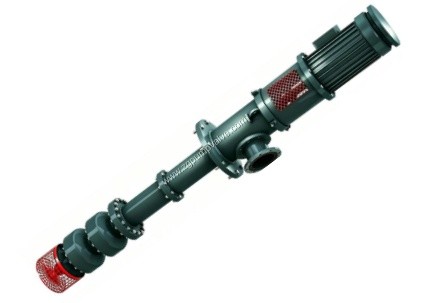
Direct Answer: The vertical turbine pumps, shorted as VTP, are centrifugal type of pumps with one or multiple mixed flow impellers on the same shaft, they are also widely known as vertical line shaft pumps, vertical mixed flow pumps or vertical long shaft pumps.
Those pumps are typically used to intake water or other type of fluids from deep pits or tanks, where the self-priming pumps are not suitable or not practical, as the suction depth of self-priming pumps are always limited-normally less than 8 meters. Compared to the submersible pumps, the vertical turbine pumps have the outstanding advantages of dry-installation, and therefore they are more convenient in maintenances.
The vertical turbine pumps are typically multistage structure with impellers of turbine-like shapes, and the vertical structure requires less floor space compared to same capacity horizontal centrifugal pumps. The typical performance of vertical turbine pumps is small flow rate and high head, but due to the multistage and radial vane design, the pump efficiency can be increased significantly when the fluid moves upwards through each impeller. Compared to other type of centrifugal pumps, the vertical turbine pumps have lower NPSHr values due to the characteristics of submerged impellers, and thus have a better performance of cavitation resistance.
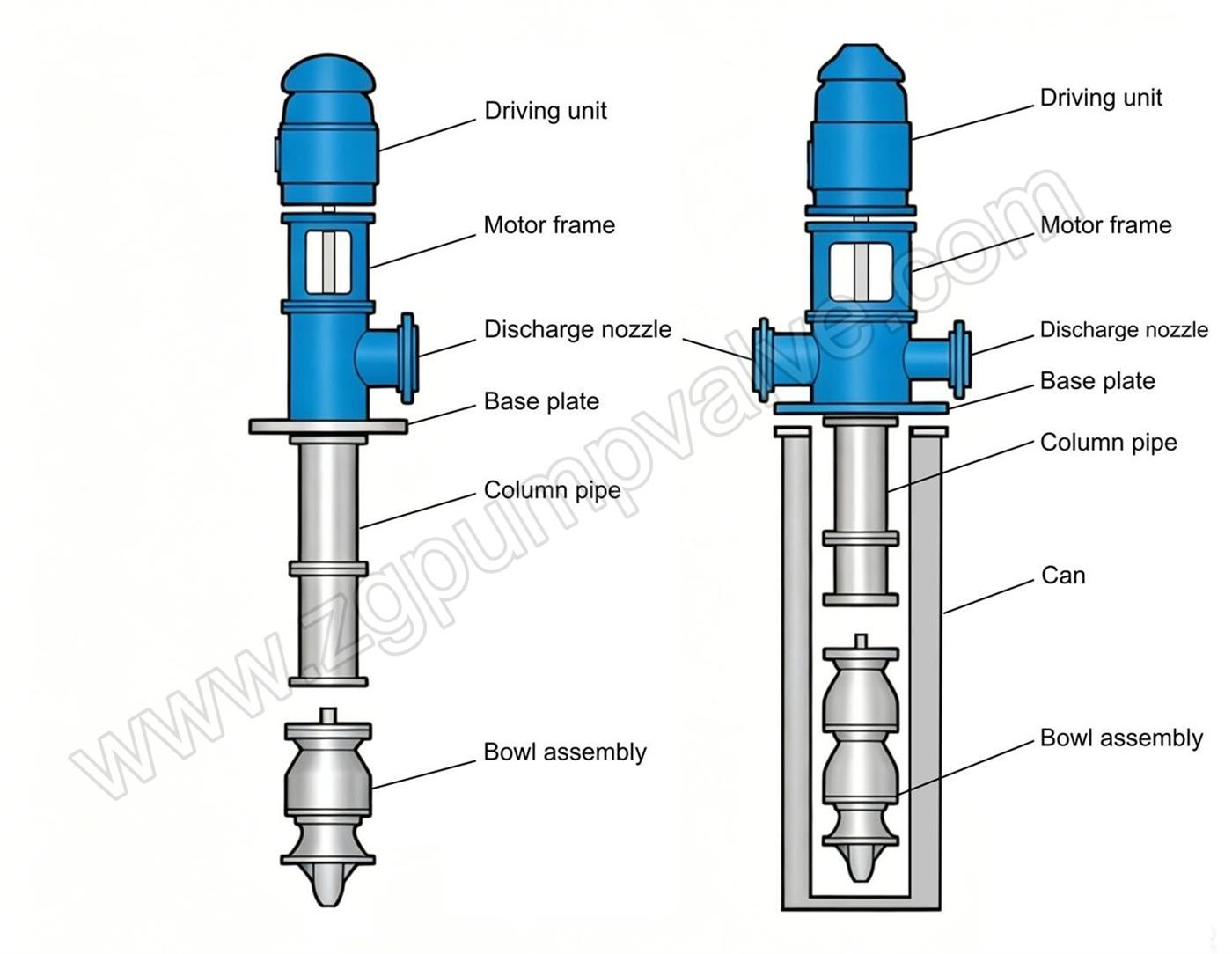
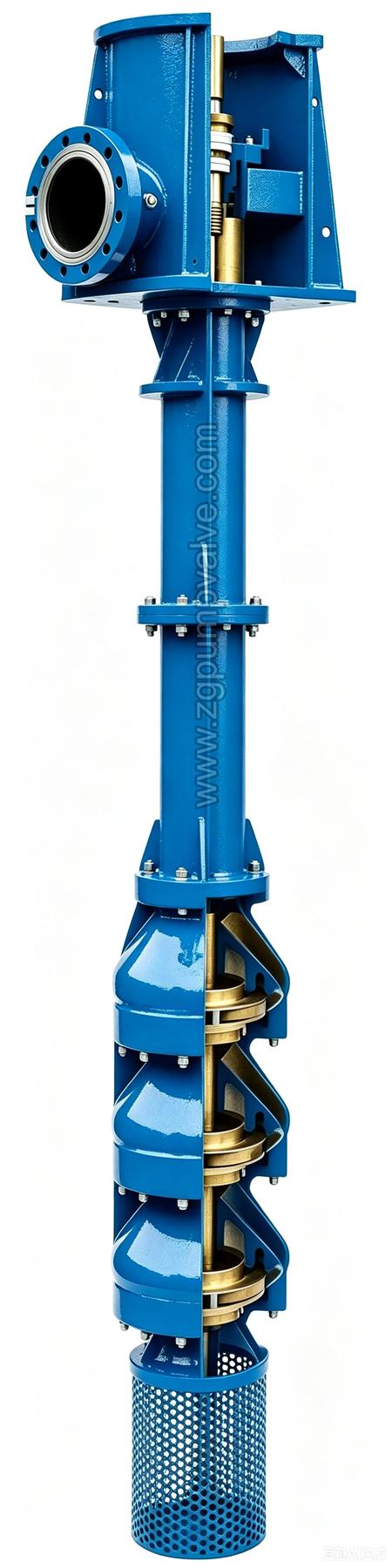
A vertical line shaft pump mainly consists of three big parts which function together to realize the stable operation, below is the vertical turbine pump diagram for your understanding.
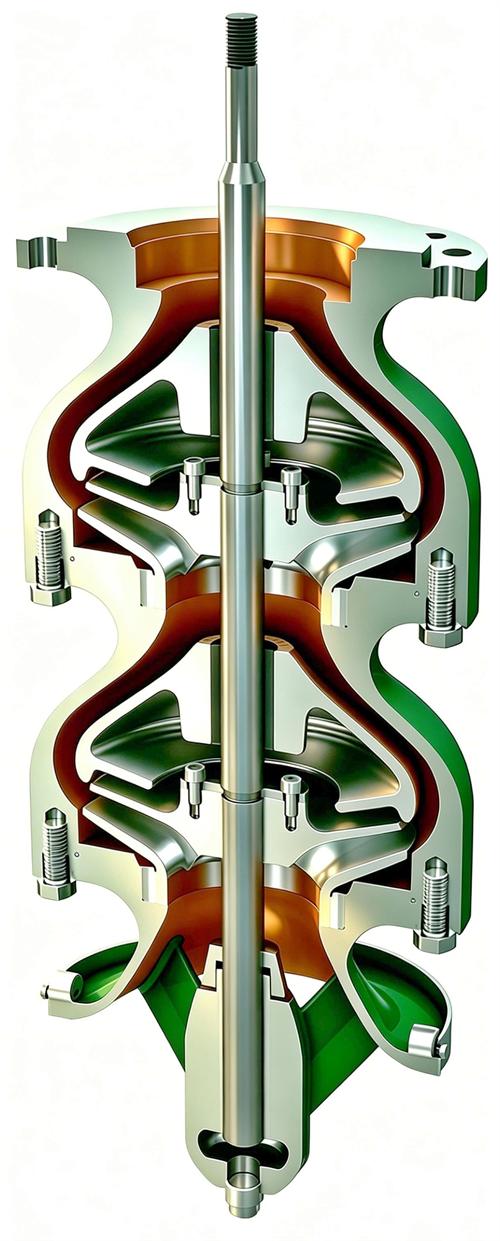
Usually consists of a suction bell, impeller(s) and diffuser casing(s) and a shaft. Most of the vertical turbine pumps are multiple stages design with one impeller in each stage, the rotating impellers accelerate the water and lead the water to the diffuser casing which transform the velocity into the pressure.
• Suction Bell-It is the entry of water which leads the water into the center of the first impeller.
• Impellers-Can be closed, semi-open or hydraulic balanced type according to the features of fluids.
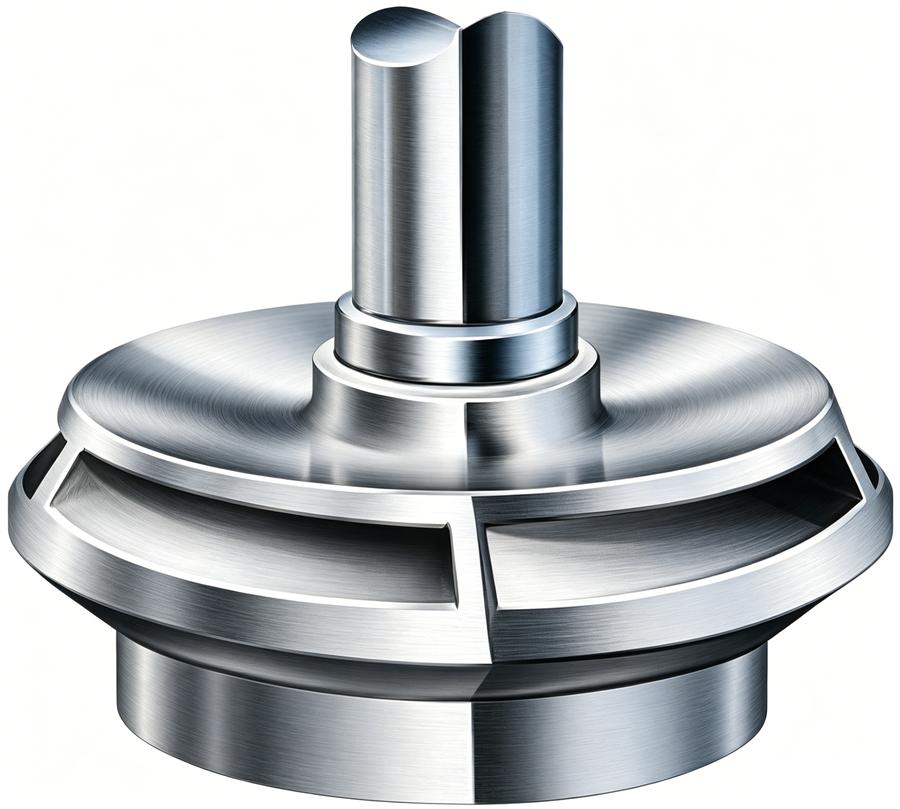
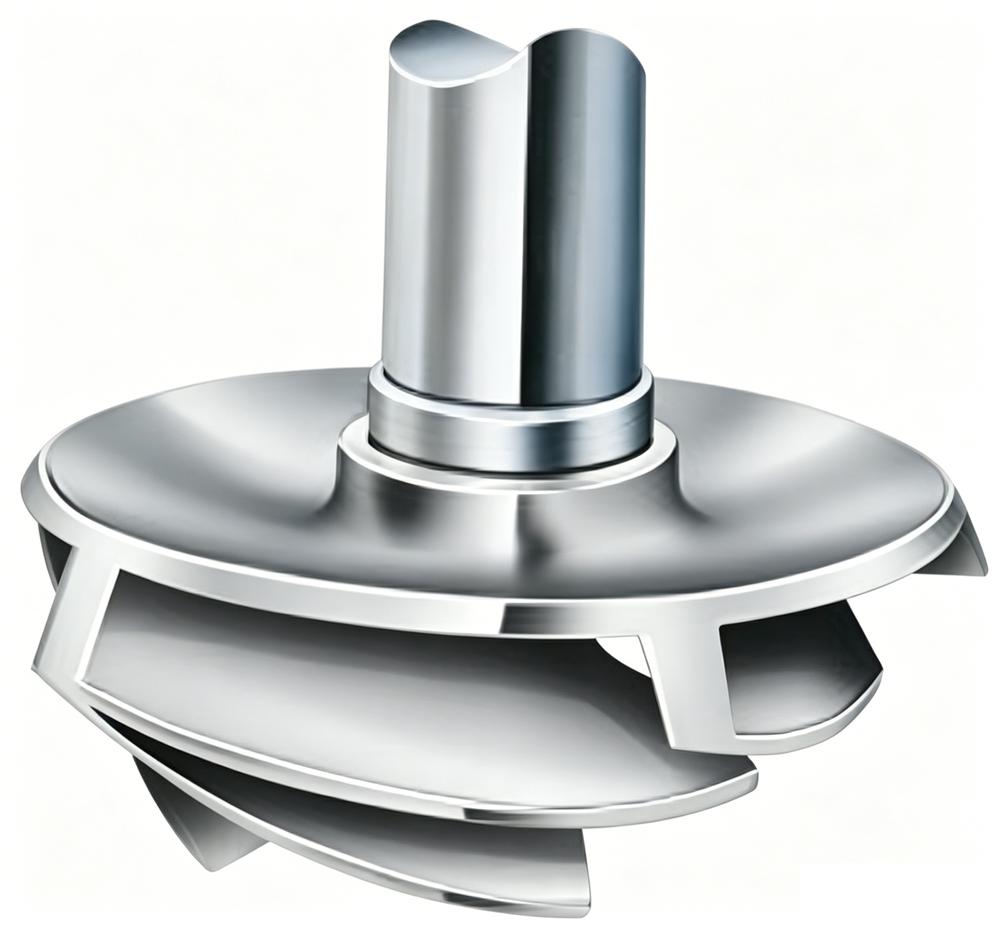
• Diffuser Casings-The parts that convert the velocity of fluid into hydraulic pressure
• Shaft-The part connecting the impellers and diffuser casings in series
Usually consists of at least one section or several sections which contains the long shaft into itself, and this column pipe connects the bowl assembly and the discharge elbow, also it guides the water upwards all the way to the discharge elbow.
• Flanged Column-Suitable for applications of clean water which can be used as self-lubricating medium of the sliding bearings. This type of column has features of ease maintenance.
• Column With Enclosed Flush Pipe-Ideal for applications of corrosive or abrasive fluids which require the external flush water for the lubrication of the shaft and sliding bearings
• Column With Threaded Shaft Connection-Widely used for small capacity and relatively low head pumps due to the economic considerations.
• Column With Keyed Shaft Connection-Recommended for vertical turbine pumps coupled with motor bigger than 500 kW.
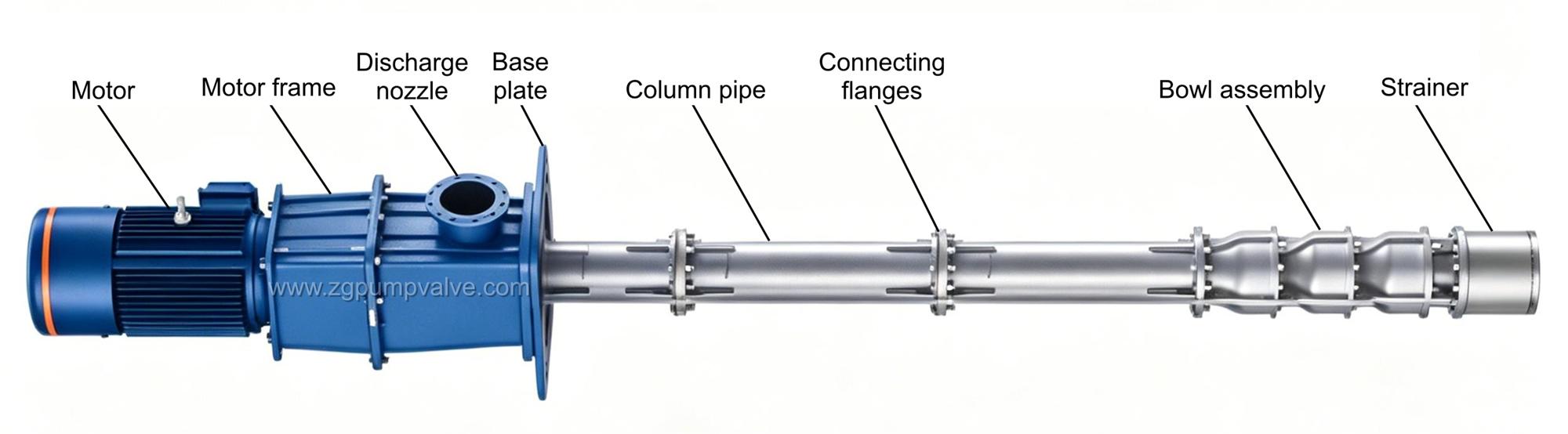
There is a base plate, an electric motor frame houses the discharge nozzle and an electric motor as the main parts above the ground for a vertical turbine pump. Those parts function as the driving unit and pump discharge nozzle, therefore are essential for redirecting the flow into horizontal direction.
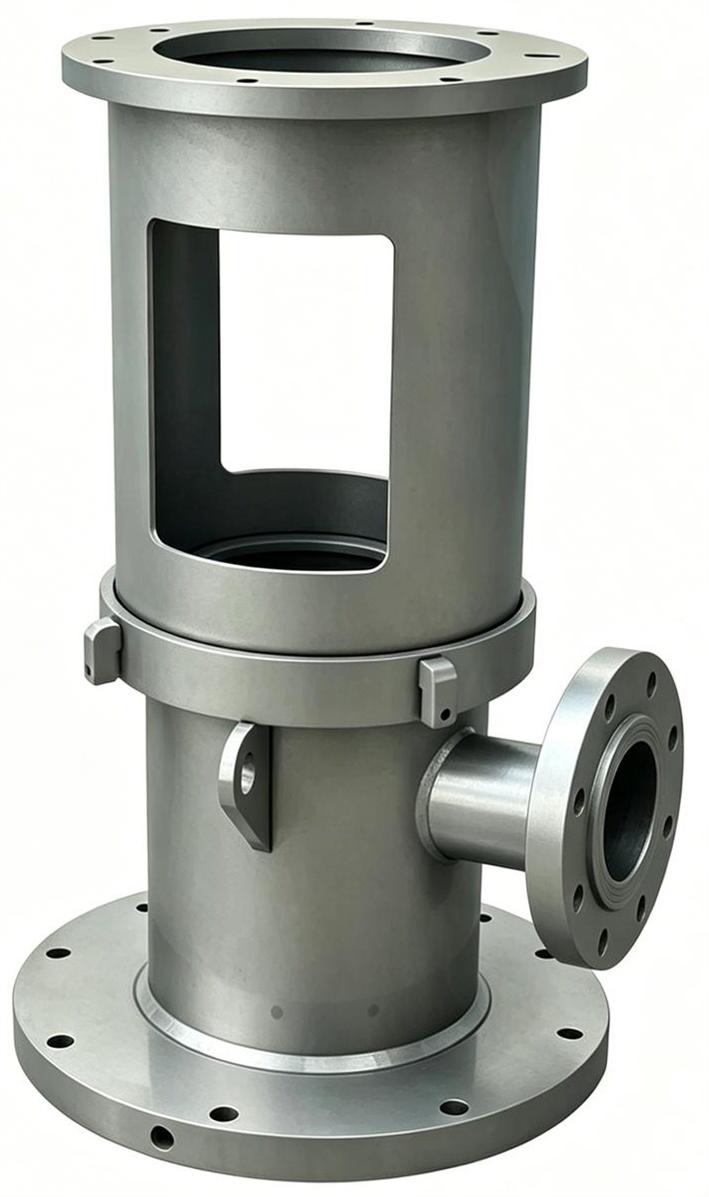
• Single Discharge Nozzle-Standard configuration for most of the vertical turbine pumps, suitable for clean water or corrosive fluids. The length and size of the discharge nozzle can be tailor designed to meet the requirements of replacement of old pumps.
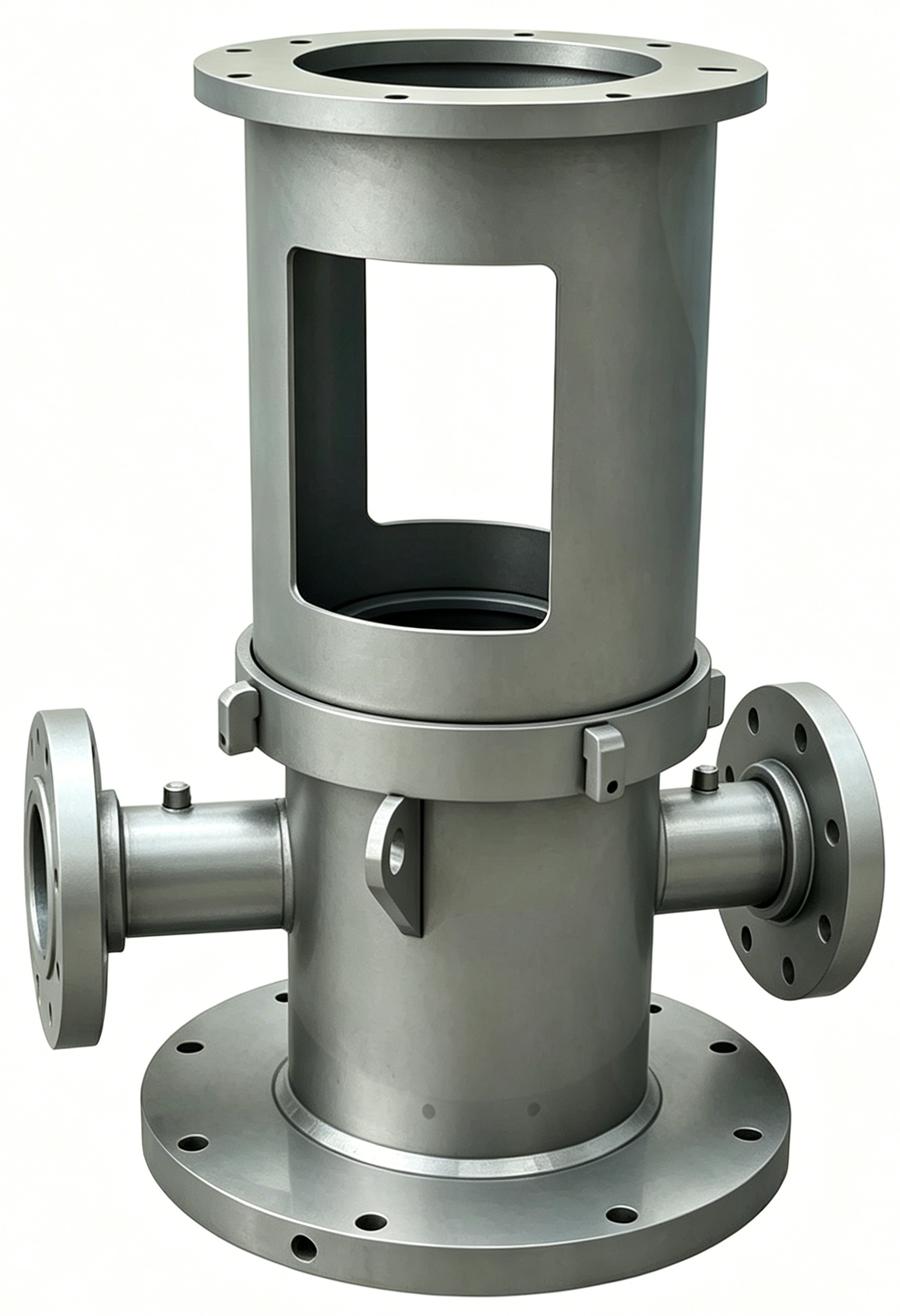
• Dual Discharge Nozzles-Optional for the applications where the wide distribution of water is required, the length, height and size of the discharge nozzles also can be tailor produced.
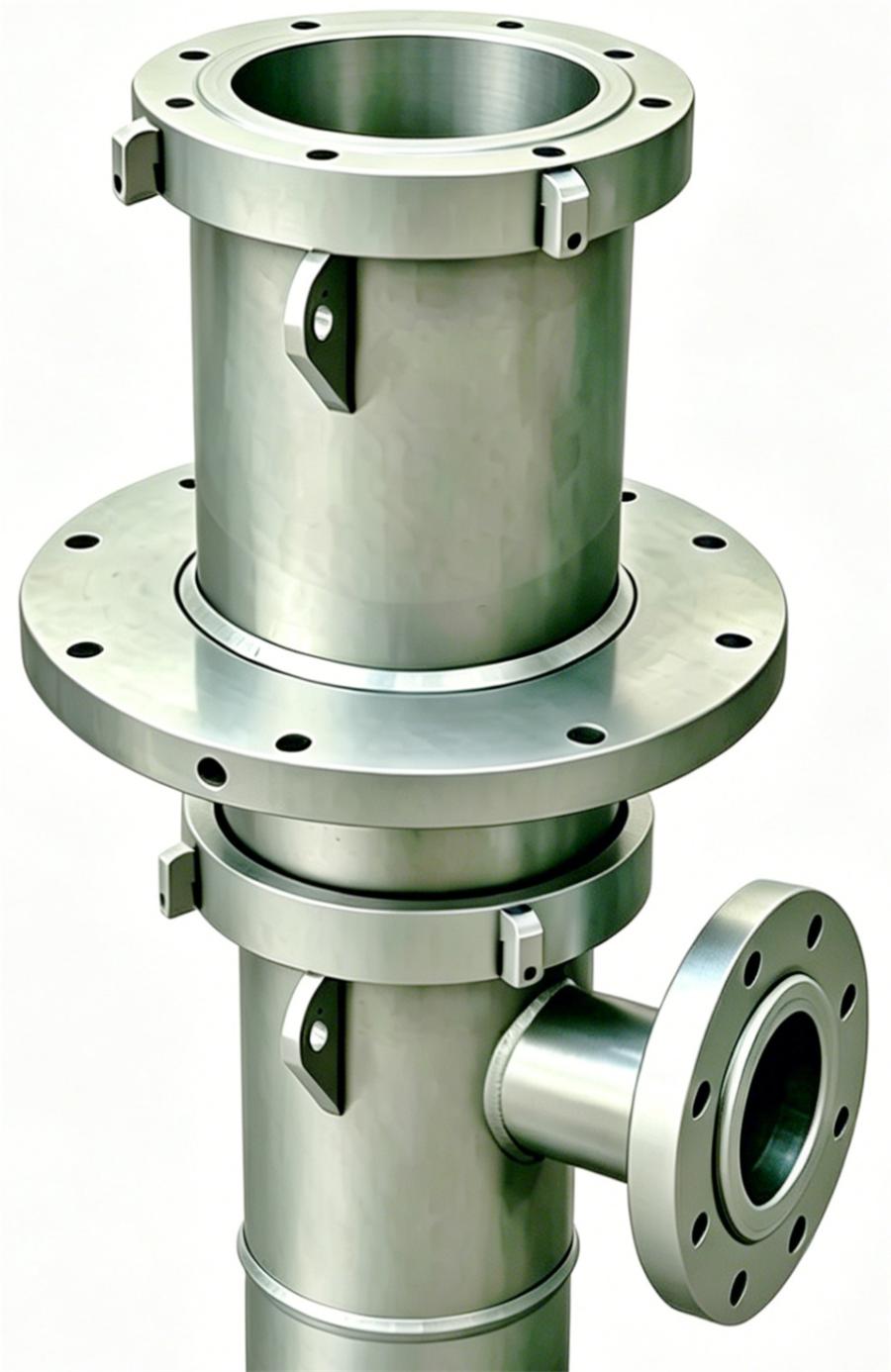
• Below Baseplate Discharge Nozzle-Usually be used for the applications where piping systems must be fully installed underground.
The long line shaft vertical turbine pumps are ideal pumping devices for various fluids including clean water, corrosive chemical solutions, sewage water with particles(requires sewage type of vertical turbine pumps)...The correct selection of the sealing system for your pumps is essential for a stable and trouble-free operation. Here are some typical options for our vertical line shaft pumps.
• Packing Seal-Most widely used and accepted sealing for those vertical pumps, slight leakage is allowed for such sealing, thus it is suitable for clean water or fluids with particles.
• Single Mechanical Seal-Suitable for medium pressure applications, we offer both cartridge and non-cartridge single mechanical seals for choice.
• Double Mechanical Seal-Ideal for high pressure applications which require “zero-leakage” during the operation process of vertical long shaft pumps.
• External Flush Mechanical Seal-Typically required for the corrosive or abrasive mediums, the higher-pressure external water or other type of flush mediums must be injected through the sealing chamber to keep the particles or corrosive mediums from entering the sealing chamber.
A vertical turbine pump intakes the water by the negative pressure created by the impellers, the water enters the suction bell and move upwards into the impellers. The high-speed impeller increases the velocity of the water, then the high velocity of water is transformed into high pressure by the diffuser casing above the impeller, the water will be further pushed upwards to next stage impeller above the first diffuser casing. Finally, the water goes through all the stages in the pump and then all the way be pushed towards the discharge nozzle of the vertical line shaft pump.
The purpose of the multistage design for those long shaft pumps is to create high pressure that is able to intake the water from the deep wells, sumps, pits or tanks. The long shaft of a vertical turbine pump is supported by several sliding bearings that are assembled inside of the pump column, while the lubrication of the sliding bearings can be either done by the pumping water or by the external flush water when the pumping fluid is not suitable as the lubricating medium.
The typical power sources of those long shaft multistage pumps are electric motors and diesel engines, and the electric motor is normally directly coupled with the pump, while the diesel engines require a gear box for connection. At the bottom of the pump, there is at least one impeller or multiple impellers working together on the same shaft to push the water upwards into the diffuser casing.
Above is the vertical turbine pump working principle for your understanding, please feel free to consult us for any further doubts.
The vertical turbine pumps are widely found working in various industries due to their outstanding advantages.
First of all, a vertical long shaft pump is vertically installed on the floor which means it saves much more space than horizontal types.
Secondly, due to the dry installation of electric motor, it enables more convenient maintenance including replacement and repair-no need of pulling up the complete pump set.
Thirdly, there are more options of driving unit available for vertical turbine pumps compared to fully submersible pumps-including electric motors, diesel engines and steam turbines.
Fourthly, those vertical pumps can be highly tailor-produced according to the special requirements from clients, e.g. column length, flow rate, discharge pressure, material of construction... As a vertical turbine pump manufacturer with decades experience in R&D, we offer elaborate pre-services, in time after-sales services and customized production for those vertical pumps.
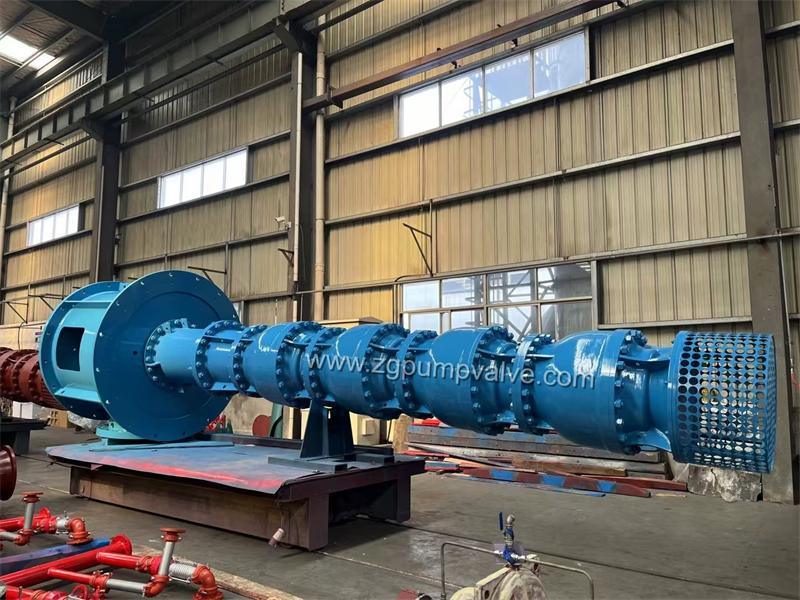
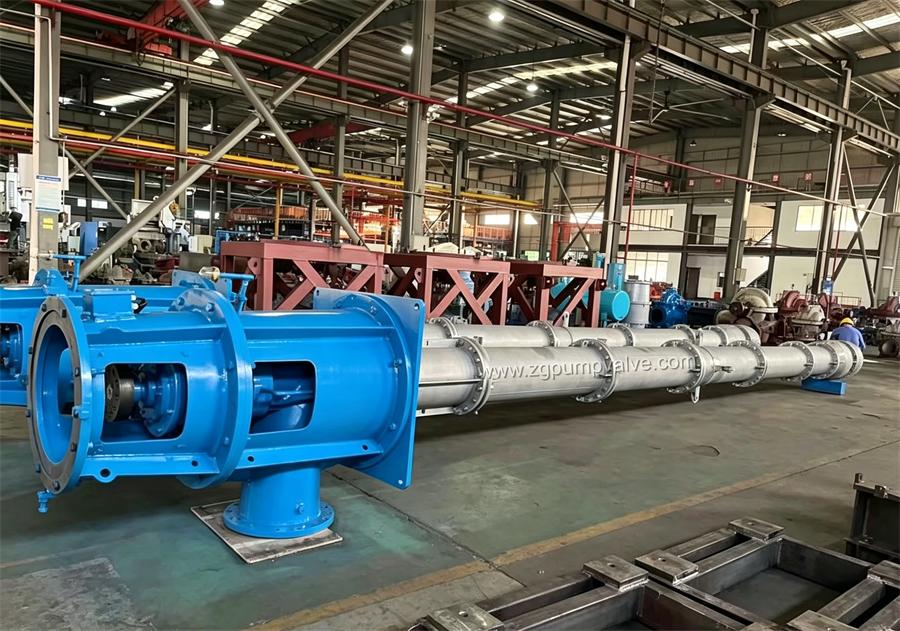
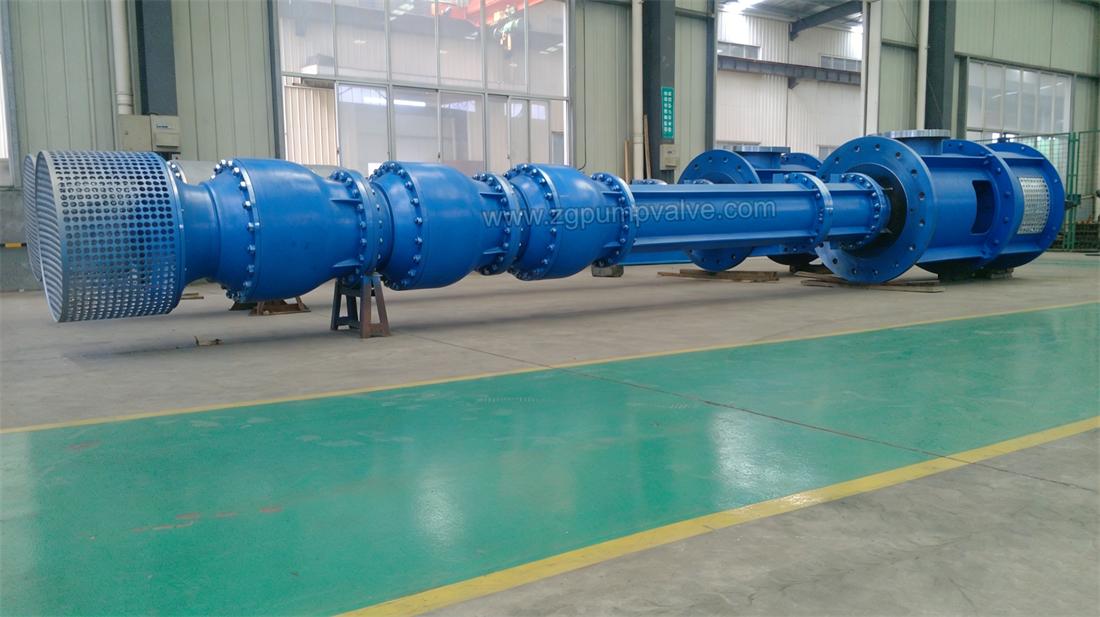
The vertical turbine pumps are widely applied in many industries where the underground water or lower position water must be intaken to higher places. Those vertical pumps are preferred on the condition that the submersible pumps are not applicable due to the limit of discharge pressure, or simply because less maintenance of pumps is a mandatory requirement. Those vertical long shaft multistage pumps consist of multiple impellers and diffuser casings integrated into a bowl assembly, making them ideal for applications of relatively small flow rate but high head. Below are the typical applications where those vertical pumps are used:
• Municipal Projects
The vertical turbine pumps are reliable pumping devices for municipal projects where the treated water from deep wells is required for distribution systems, those pumps providing stable flow and pressure for the systems. But it requires stainless steel as the material of constructions for those pumps when they are used for drinking water applications.
• Industrial Projects
The vertical turbine pumps are the “beating hearts” for the industrial applications, as they are the power source which consistently providing the high-pressure mediums to many applications including fire protection, circulation and water transportation.
• Irrigation Projects
Due to the feature of high pressure, the vertical turbine pumps with long shaft configuration are always used for lifting underground water from deep pits or wells and delivering the water to distant farms to maximize the farm area.
• Dewatering Purposes
The vertical turbine pumps can be used for evacuation of water from underground construction sites, mines or sumps, where the submersible pumps can not meet the requirements of high pressure.
• Mining Projects
The vertical turbine pumps can be used to handle abrasive mine waters including certain number of particles, however the proper material selection is required for such application, otherwise the pump can be worn out shortly.
• Fire Protection
The vertical turbine fire pump is the essential power source for the entire pumping device for a fire protection system, it provides the relatively big flow rate at high pressure to make sure the water can be delivered to the higher places where the fire disasters could happen.
The vertical turbine pumps offer diversified installation and transmission according to the conditions at client's site, below are the typical installation types for your understandings:
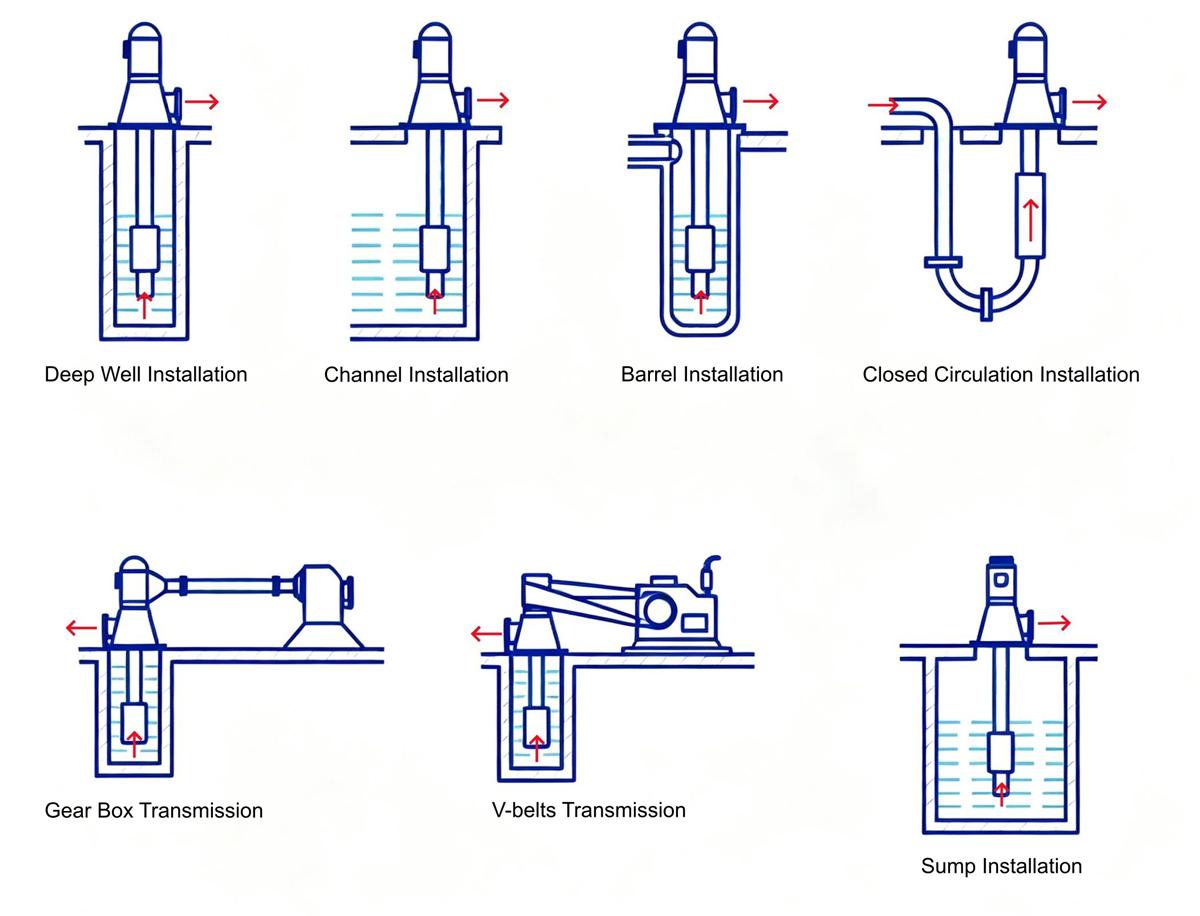
Because of the diversified functions of the vertical line shaft pumps, they are able to be found in various industries where the underground water must be pumped to the ground. In spite of the features of the easy maintenance, we still need to follow the below instructions during the maintenance works in order to prolong the service life of those vertical pumps.
Frequent inspections-Including checking status of mechanical seals or packing seals, lubricating oil status, abnormal noise and vibration, leakages etc.
Quarter inspections-The pump set must be checked every three months to find out if any loosening of foundation bolts and other connecting bolts, the flush system must be checked too if it is applicable to the pump.
Annual inspections-After one year’s operation, the vertical turbine pump must be thoroughly inspected from the capacity to the head, the shaft power of the pump needs to be checked to prevent any overloading. The pump must be disassembled to find out the failed part if the pump fails to meet the required flow rate and head.
Quick wearing parts-Due to the designing features of high speed, there are several wearing parts including sliding bearings, mechanical seal, packing seal, impellers and shafts. The in-time replacement of those parts is the essential precondition of long-time and stable operation of the vertical turbine pumps.
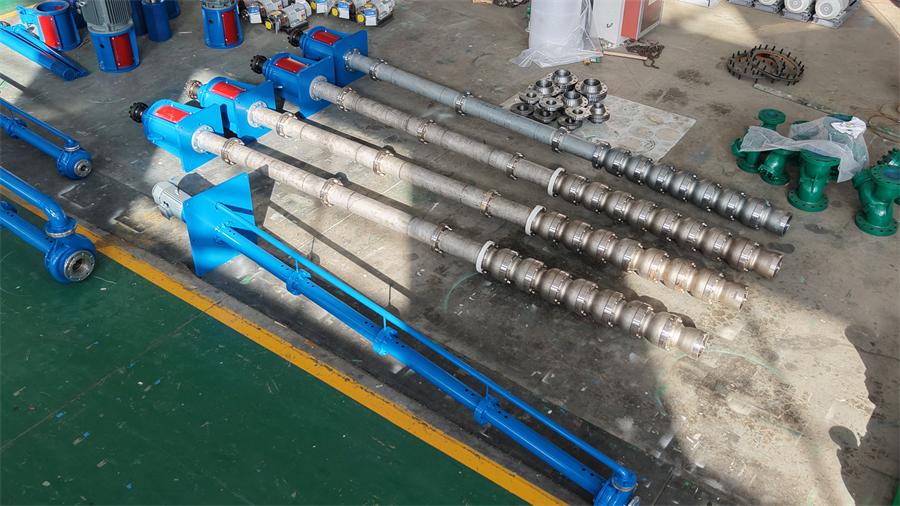
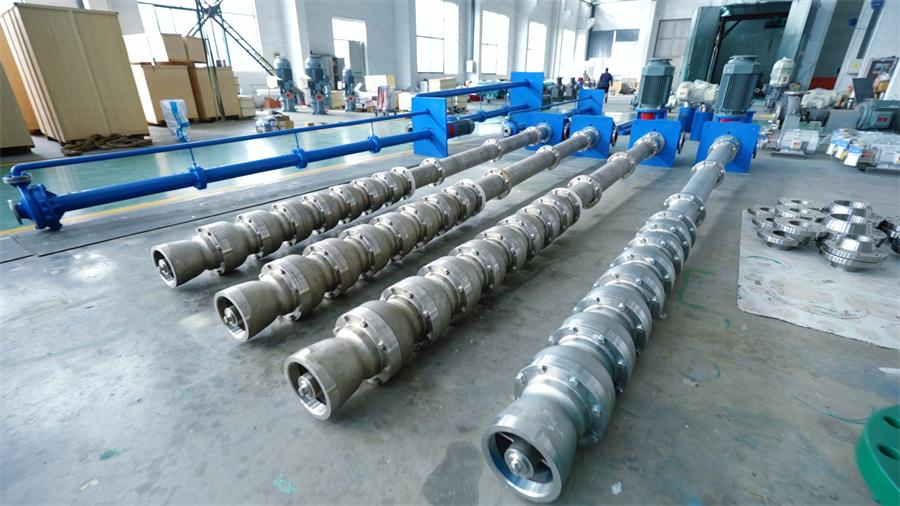
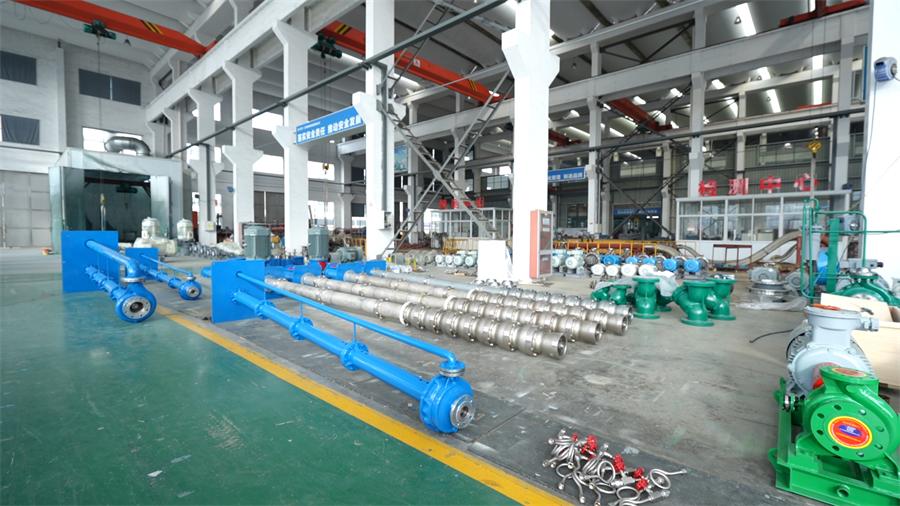
By following the instructions as below may solve most of the malfunctions of your vertical line shaft pumps, but you may feel free to contact us for any further doubts during the process of installation or operation of your vertical long shaft pumps.
| Malfunctions | Causes | Rectifications |
| Pump can't be started | Motor or engine setup issues | Adjust the motor or engine setup |
| No water pumped out | Discharge valve is closed | Open the discharge valve |
| The strainer is blocked by particles/rubbishes | Clean the strainer | |
| Water level is too low | Increase the water level | |
| Less flow rate | Lower pump speed | Increase the speed to rated one |
| Discharge valve opening is not enough | Adjust the discharge valve to the right opening | |
| Blocking in the bowl assembly or column pipe | Remove the particles | |
| Cavitation | Adjust the water level | |
| Less discharge pressure | Lower pump speed | Increase the speed to rated one |
| Blocking in the bowl assembly or column pipe | Remove the particles | |
| Discharge valve opening is too much | Adjust the discharge valve to the right opening | |
| Abnormal vibrations | Misaligned couplings | Re-alignment of Couplings |
| Worn impellers | Replace to new impellers | |
| Failed bearings | Replace to new bearings | |
| Bent shafts | Replace to new shafts | |
| Loosen bolts on the base plate | Tighten the bolts | |
Abnormal leakages of packing | Worn packing | Replace to new packing |
Leakages of mechanical seal | Worn mechanical seal | Replace to new mechanical seal |
Less service life of mechanical seal | Mechanical seal is not proper flushed | Flush the mechanical seal in a right way(both flow and pressure) |
| Fluid with many particles | Choose the right flush plan and right materials of mechanical seal |
As a rich experience manufacturer of the vertical long shaft pumps, we are happy to offer the following services to our clients all over the world:
• 7x24 in time pre-sales service and guidance
• Factory Acceptance Test of vertical turbine pumps
• One year/ 18 months warranty
• Elaborate after-sales service of on-line meeting
• Installation and commissioning guidance
• In time supply of pump spare parts
As a vital pumping device for moderate flow rate and relatively high pressure, the vertical turbine pumps have been working in various industries for decades, contributing their efforts to promote the economy. It is believed that by going through this article, you may have a full understanding of the types, structure and working principle of those vertical inline shaft pumps. However, if you still have any further doubts or need any help/guidance of those pumps, we will always be happy to receive your messages, emails or calls.
Contact us now: sales@zgpumpvalve.com or wa.me(Whatsapp: +8613738006567)
Visit our workshops by VR Tour